English Spanish
Sonora Could Be the World's First Paperless Court System
Three barriers stand between Sonora and justice without paper.
Author: ME Williamson
Blog Category: Technology
Posted: 28 October 2026
Disclosure: The author is the president of Williamson Software, which develops the open-source technology discussed here and would like to propose a pilot to the state.
Sonora has an opportunity to lead the world. Under Governor Alfonso Durazo, the state has begun exploring an entirely paperless court system. A pilot launched now could show real results before the current administration's term concludes in 2027.
Mexico already has the foundation for this. The country has long been a leader in advanced cryptography and secure digital infrastructure, and it pioneered electronic invoicing through the Comprobante Fiscal Digital por Internet (CFDI), which replaces paper invoices with digitally certified documents validated through the Servicio de Administración Tributaria (SAT).
With the CFDI businesses use certified software to generate invoices containing transaction details and tax information. Sellers send them electronically to buyers, who validate and accept them. The SAT also receives a copy, which ensures transparency and reduces fraud. The system has improved efficiency and set a global standard for digital tax compliance.
Courts, by contrast, still depend on paper. A single case file in Sonora may be copied repeatedly and physically moved hundreds of times, and the same is true of almost every legal system on the planet. Why has a world with the Internet and public cryptographic innovations been so slow to change?
Concerns about disruption, cost, and risk are common. But the greatest risk is maintaining the same manual, paper-heavy processes year after year. Every lost file, every delayed hearing, and every box of photocopies is a cost that a paperless system removes.
1. Document identity. A paperless system must be able to uniquely identify every document. To be adopted widely, that capability cannot belong to any one corporation or government. It must be open, public, and able to scale worldwide.
DNA, a public database network introduced in 2025, was designed for this role. Anyone can open an account through a service provider and create eDocuments manually or automatically. The document's fingerprint (its hash), its unique ID, and its owner's ID are stored on the public database. The document itself is never stored on DNA. The court keeps its files under its own control, while anyone can verify that a document is authentic and unaltered.
2. Authority and signatures. A court system has a hierarchy: the governor, senior judges, judges, secretaries, clerks, and the lawyers who file before them. Each person needs digital signing power, and anyone must be able to check a signature. That requires a single, universal, open portal for public keys, free of corporate or single-state control.
On DNA, every participant receives a public/private key pair after being vetted by the Entity Verification Service (EVS). The EVS is currently the Earthica Society, and the DNA peers vote to choose it every 10 years. Gatekeepers are necessary to manage abusive members, but they must never become the masters of the network. This approach also fits alongside Mexico's existing electronic signature framework, such as the e.firma used with the SAT.
3. Open-source infrastructure. The portals, the case management software, and the underlying infrastructure should be fully open source, with no single point of corporate control. Every part of the system should be open to examination by the government and its IT staff, and there should be no lock-in to any one vendor.
DNA is built on the open-source Ignition project, and the proposed portal and document image system is built on IPortal, also open source. Both are available on GitHub. Williamson Software develops and maintains them and serves as the current Technology Verification Service (TVS) of DNA, a role the DNA peers granted by vote in 2025 and which must be renewed every 10 years.
The state does not need to digitize everything at once. I propose a 90-day pilot in a single court, covering document identity, digital signatures for the participants in that court, and the open-source case portal. The pilot would be non-exclusive and built on open standards, so the state keeps full ownership of its data and its options.
A pilot would let Sonora measure what matters:
> Time saved per case file
> Pages printed and copied per case
> Cost per case file, paper versus digital
The results would give the state concrete evidence before deciding whether to expand.
Paperless legal systems are inevitable. The question is who will be first. The state that moves now will be recognized as a pioneer in digital justice, and will offer its citizens faster, more transparent, and more accessible courts. Sonora is ready.
To learn more about DNA, read the FAQ at myworld.exchange.
Mark Williamson is the president of Williamson Software in Santa Barbara, California, and a computer software developer with specialization in database and cryptographic systems. He created the DNA network and the open-source Ignition and IPortal projects. A Californian by birth, Mark now lives in Mexico. He did not vote for Donald Trump, and he wants his Mexican neighbors to know that he deeply respects Mexico, its people, and its sovereignty. To discuss a paperless court pilot for Sonora, contact him at markw@williamsonsoftware.com.
Sonora has an opportunity to lead the world. Under Governor Alfonso Durazo, the state has begun exploring an entirely paperless court system. A pilot launched now could show real results before the current administration's term concludes in 2027.
Mexico already has the foundation for this. The country has long been a leader in advanced cryptography and secure digital infrastructure, and it pioneered electronic invoicing through the Comprobante Fiscal Digital por Internet (CFDI), which replaces paper invoices with digitally certified documents validated through the Servicio de Administración Tributaria (SAT).
With the CFDI businesses use certified software to generate invoices containing transaction details and tax information. Sellers send them electronically to buyers, who validate and accept them. The SAT also receives a copy, which ensures transparency and reduces fraud. The system has improved efficiency and set a global standard for digital tax compliance.
Courts, by contrast, still depend on paper. A single case file in Sonora may be copied repeatedly and physically moved hundreds of times, and the same is true of almost every legal system on the planet. Why has a world with the Internet and public cryptographic innovations been so slow to change?
Concerns about disruption, cost, and risk are common. But the greatest risk is maintaining the same manual, paper-heavy processes year after year. Every lost file, every delayed hearing, and every box of photocopies is a cost that a paperless system removes.
Why are courts still on paper?
| I am a database developer with many decades of experience, and I have spent years on this question. In my view, three barriers have kept courts on paper, and each can now be overcome. | 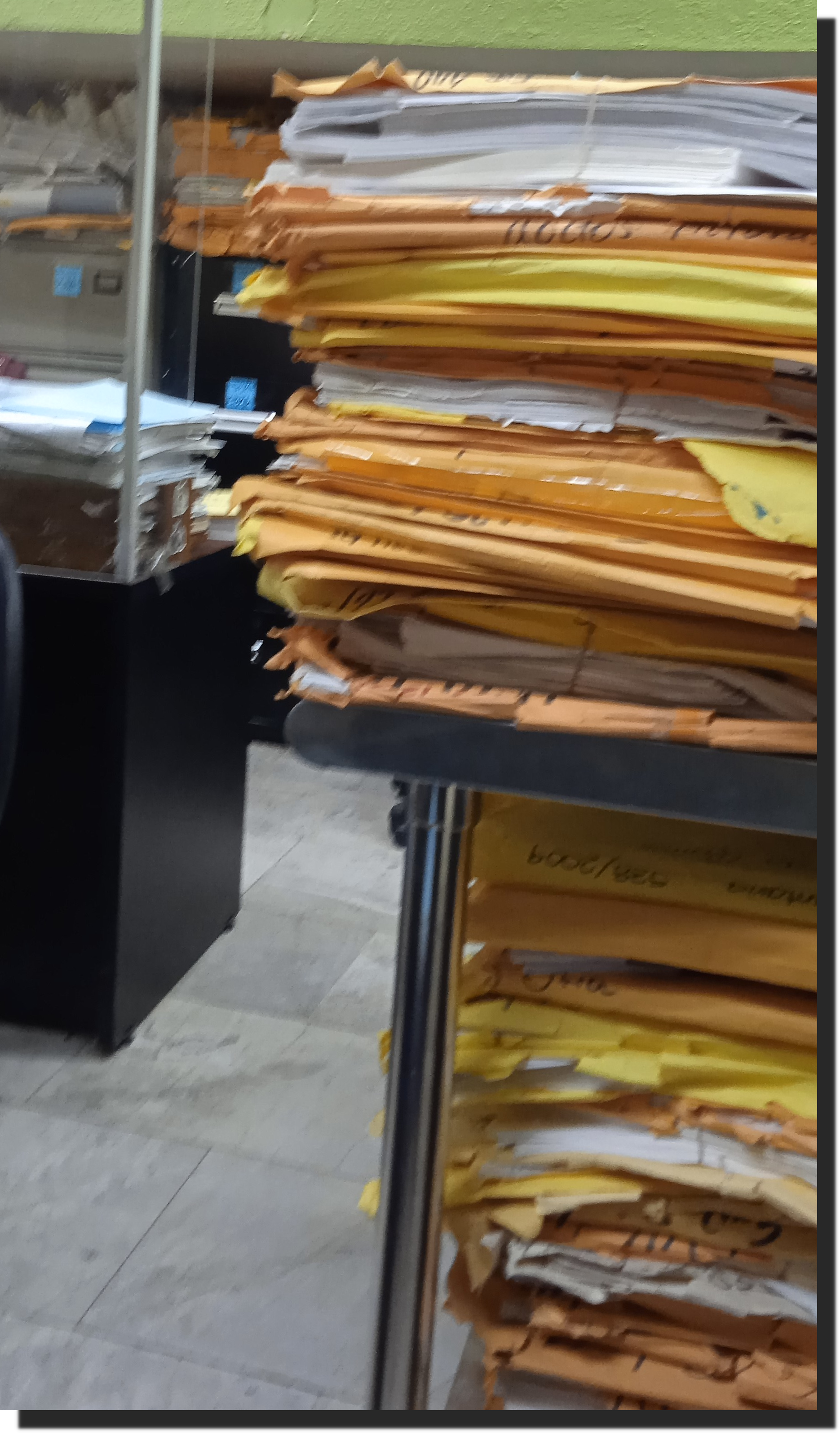 |
1. Document identity. A paperless system must be able to uniquely identify every document. To be adopted widely, that capability cannot belong to any one corporation or government. It must be open, public, and able to scale worldwide.
DNA, a public database network introduced in 2025, was designed for this role. Anyone can open an account through a service provider and create eDocuments manually or automatically. The document's fingerprint (its hash), its unique ID, and its owner's ID are stored on the public database. The document itself is never stored on DNA. The court keeps its files under its own control, while anyone can verify that a document is authentic and unaltered.
2. Authority and signatures. A court system has a hierarchy: the governor, senior judges, judges, secretaries, clerks, and the lawyers who file before them. Each person needs digital signing power, and anyone must be able to check a signature. That requires a single, universal, open portal for public keys, free of corporate or single-state control.
On DNA, every participant receives a public/private key pair after being vetted by the Entity Verification Service (EVS). The EVS is currently the Earthica Society, and the DNA peers vote to choose it every 10 years. Gatekeepers are necessary to manage abusive members, but they must never become the masters of the network. This approach also fits alongside Mexico's existing electronic signature framework, such as the e.firma used with the SAT.
3. Open-source infrastructure. The portals, the case management software, and the underlying infrastructure should be fully open source, with no single point of corporate control. Every part of the system should be open to examination by the government and its IT staff, and there should be no lock-in to any one vendor.
DNA is built on the open-source Ignition project, and the proposed portal and document image system is built on IPortal, also open source. Both are available on GitHub. Williamson Software develops and maintains them and serves as the current Technology Verification Service (TVS) of DNA, a role the DNA peers granted by vote in 2025 and which must be renewed every 10 years.
A practical first step: a 90-day pilot
The state does not need to digitize everything at once. I propose a 90-day pilot in a single court, covering document identity, digital signatures for the participants in that court, and the open-source case portal. The pilot would be non-exclusive and built on open standards, so the state keeps full ownership of its data and its options.
A pilot would let Sonora measure what matters:
> Time saved per case file
> Pages printed and copied per case
> Cost per case file, paper versus digital
The results would give the state concrete evidence before deciding whether to expand.
The opportunity
Paperless legal systems are inevitable. The question is who will be first. The state that moves now will be recognized as a pioneer in digital justice, and will offer its citizens faster, more transparent, and more accessible courts. Sonora is ready.
To learn more about DNA, read the FAQ at myworld.exchange.
About the Author
Mark Williamson is the president of Williamson Software in Santa Barbara, California, and a computer software developer with specialization in database and cryptographic systems. He created the DNA network and the open-source Ignition and IPortal projects. A Californian by birth, Mark now lives in Mexico. He did not vote for Donald Trump, and he wants his Mexican neighbors to know that he deeply respects Mexico, its people, and its sovereignty. To discuss a paperless court pilot for Sonora, contact him at markw@williamsonsoftware.com.